
Click on this week’s blog to learn about common conference room setups and key factors to consider when designing an effective space.
A conference room needs to do more than fit a table and a few chairs. The way the space is arranged can affect how people interact, follow presentations, and participate in meetings. It’s possible to make the room more comfortable and useful by picking the right table and layout.
These are some common ways that conference rooms are set up, along with some things you should think about when making your own.
Choose a Layout That Fits the Meeting
Different meeting formats call for different arrangements. The right setup depends on how many people will be in the room and how they need to interact.
Some common options include:
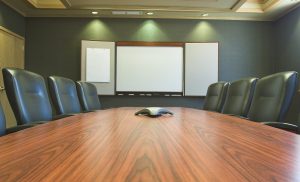
- Boardroom Style: Tables are arranged in a rectangular or oval shape, with chairs positioned around the perimeter. For small to medium-sized meetings and discussions, this layout works well.
- U-Shaped Style: Rectangular tables form a U shape, leaving an open area in the middle. It’s a good option for interactive meetings, workshops, and presentations.
- Classroom Style: This configuration is advantageous for lectures and training sessions, as the tables and chairs are arranged in rows that face the front of the room.
- Theater Style: Chairs are placed in rows facing the front, without tables. This arrangement is suited to larger presentations and seminars.
- Banquet Style: Round tables encourage group interaction and discussion, making this layout a good fit for collaborative sessions.
Consider Seating and Room Capacity
Consider the number of people who will be using the conference room before you choose the tables. Seating capacity refers to how many people can comfortably sit at each table, while room capacity accounts for everyone and the furniture throughout the room. It’s important to consider both when planning an arrangement. Tables and chairs take up space, so the room needs to accommodate attendees comfortably while allowing for safe movement.
Choose Tables That Offer Flexibility
A conference room may serve several purposes, so a single fixed arrangement won’t always work. Modular tables can be repositioned and rearranged to accommodate a variety of meeting styles, including a traditional boardroom setup and a U-shaped configuration.
The size and functionality of the furniture matter, too. In smaller meeting rooms, compact, multifunctional pieces can help make better use of the available space. High-top tables and stools are another option suitable for informal meetings or brainstorming sessions.
Make Comfort and Technology Part of the Design
People may spend hours in a conference room, so comfortable furniture is worth considering. Ergonomic tables and chairs can help make longer meetings more comfortable.
Technology also plays an important role in how a meeting space functions. Video conferencing equipment, projectors, and interactive whiteboards can support communication and meetings. Whiteboards, corkboards, and glass walls can also provide useful surfaces for brainstorming.
Natural light and flexible seating arrangements can further help create a comfortable space that adapts to different types of meetings.
Contact Edwards & Hill for an Office Furniture Supplier in Baltimore, MD
Are you ready to redesign your space to maximize productivity and well-being? Edwards & Hill can help you design and install the perfect designs for your business. Edwards & Hill is a leading office, education, medical, and hospitality furniture provider with high-quality design and installation services for any style or scale. We have our headquarters in Annapolis Junction, Maryland, and another convenient office location in St. Louis, Missouri. If you are ready to get your office design started, contact us online or give us a call at 301-317-4250. For the St. Louis office, please call 314-797-5077. For more furniture design tips, follow us on Facebook, X, LinkedIn, and Pinterest.