
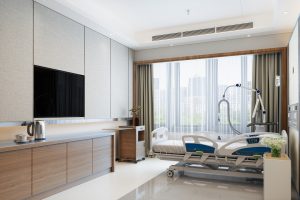
When selecting healthcare furniture for your facility, you must consider critical factors such as cleanability and structural integrity.
Selecting furniture for hospitals, clinics, and medical offices is a thoroughly different approach when compared to something like outfitting a corporate office or a modern hospitality space. Clinical environments are known for putting severe wear and tear on their furniture and also require aggressive, regular sanitation that would cause other commercial pieces to fail within months. When specifying healthcare furniture for your facility, facility managers and designers must look at critical factors like cleanability, regulatory compliance, and structural longevity.
Withstanding Hospital-Grade Cleaning Products
Your typical commercial furniture is engineered to handle light cleaning or occasional spills, but healthcare settings require much more rigorous sanitation procedures. Hospital-grade disinfectant wipes containing bleach derivatives, quaternary ammonium compounds, or accelerated hydrogen peroxide are used on surfaces multiple times a day.
If furniture is not specified for chemical resistance, the finishes are going to crack and cloud rapidly. To prevent premature breakdown, choose non-porous surfaces such as high-pressure laminate (HPL), sealed edges that prevent moisture issues, and welded upholstery seams that stop cleaning agents from degrading internal foam or threads.
Flammability Standards and Regulatory Compliance
Fire and other safety codes are paramount in any medical or clinical facility. In the US, we typically refer to California Technical Bulletin 117-2013 as a sort of baseline for smolder-resistance and open-flame flammability standards for upholstered commercial furniture. When sourcing healthcare furniture, be sure that all upholstered pieces—from waiting room armchairs to patient recliners—carry compliant test reports covering both the outer fabric and the underlying foam. Ensuring strict compliance can help protect patients, staff, and visitors and may even satisfy regulatory facility requirements.
Integrating Inclusive, Accessible Seating Options
Creating a welcoming, accessible environment means designing spaces to accommodate every patient comfortably and safely. Healthcare waiting areas, infusion sites, and examination rooms should always incorporate a thoughtful proportion of rated bariatric seating. Integrating heavy-duty, weight-rated chairs directly into your standard furniture package eliminates the need to source specialized furniture on demand, ensuring dignity, safety, and operational efficiency for your entire patient population.
Prioritizing Designs to Prevent Infections
Floor hygiene and infection control are top priorities in clinical settings. Enclosed pedestal bases, solid panel sides, and platform furniture can all create hidden zones beneath and around pieces where dust, debris, and, most importantly, pathogens can accumulate—which makes routine cleaning difficult as well. Specifying healthcare furniture such as open-base chair designs, sled bases, or cantilevered legs allows housekeeping staff to easily clean and mop underneath furniture without having to move heavy pieces, ensuring a safer and more sanitary environment throughout the healthcare facility.
Contact Edwards & Hill for a Healthcare Furniture Supplier in Baltimore, MD
Are you ready to redesign your space to maximize productivity and well-being? Edwards & Hill can help you design and install the perfect designs for your business. Edwards & Hill is a leading office, education, medical, and hospitality furniture provider with high-quality design and installation services for any style or scale. We have our headquarters in Annapolis Junction, Maryland, and another convenient office location in St. Louis, Missouri. If you are ready to get your office design started, contact us online or give us a call at 301-317-4250. For the St. Louis office, please call 314-797-5077. For more furniture design tips, follow us on Facebook, X, LinkedIn, and Pinterest.